Musk's Midterm Bet: A $76 Million Push to Tip the Scales
The billionaire's personal committee poured significant funds into the Texas Senate race, marking the largest individual contribution in the current election cycle.
By Priya Sharma ·
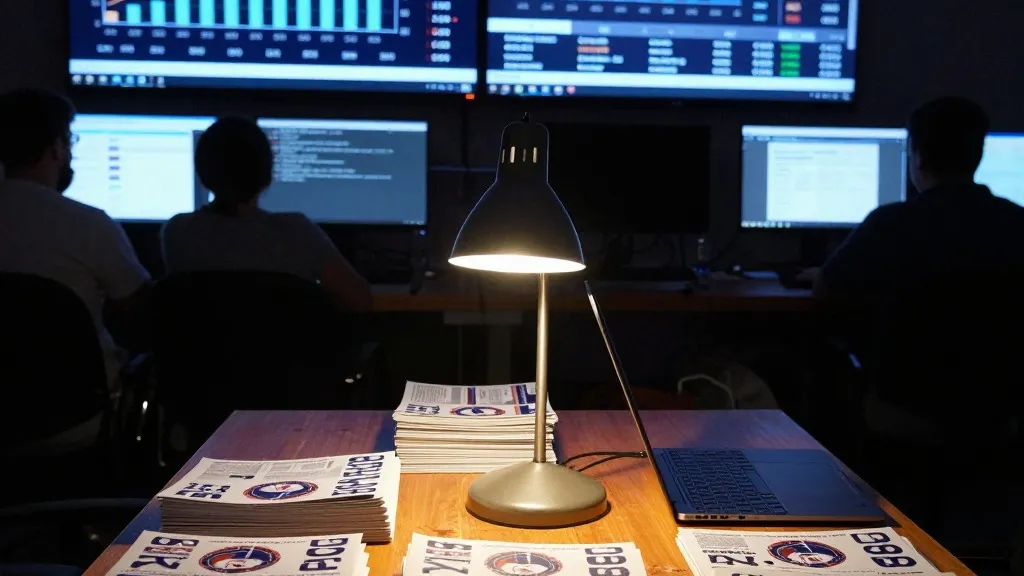
Voters across the South Central region are seeing a surge in political advertisements that reflects a massive financial injection into the final weeks of the midterm campaign. Elon Musk has directed over $76 million to his personal political committee, America PAC, during the first two weeks of October. This substantial sum is designed to support Republican candidates as they approach the election date. The funding marks a significant escalation in spending for the final stretch of the race.
The Texas Senate contest has emerged as the primary beneficiary of this new capital. The committee allocated $15.2 million to this single race, a figure that is double the amount spent in the state throughout the summer. This targeted approach highlights the high stakes involved in securing this particular seat. The concentration of resources in one state underscores the strategic importance of the Texas election for the broader midterm goals.
The breakdown of this spending reveals a clear focus on attacking the Democratic nominee. Of the money directed to Texas, $12.4 million was used to run negative campaigns against James Talarico. In contrast, $2.8 million was spent promoting Republican candidate Ken Paxton. This disparity in spending suggests a strategy of defense and counter-attack rather than broad brand building. The committee appears to be prioritizing the disruption of the opposition's message over positive reinforcement of their own candidate.
Musk has also shifted his advertising tactics to match modern media consumption habits. The committee spent $11.4 million on digital ads during the same two-week period. This amount is nearly equal to what was spent on traditional mail and texting combined. This pivot to online platforms indicates a recognition that digital channels are now a primary venue for voter engagement. The shift suggests a move away from older formats in favor of the mediums where voters currently spend their time.
The total financial commitment from Musk this cycle now exceeds $445 million to various Republican groups. This makes him the largest known individual donor in the midterms. Since July alone, more than $165 million has flowed to America PAC. These figures place his influence well beyond that of typical high-net-worth donors. His contributions have become a defining feature of the current political landscape, shaping the scale of operations for the parties he supports.
Beyond the numbers, Musk has been actively involved in the public discourse surrounding the Texas race. He recently used his social media platform to criticize Talarico, calling him a creep and making claims about his views on family policies. Talarico responded to these attacks by highlighting the influence of a single trillionaire on the political system. He noted that there is something deeply wrong with a system that allows one person to buy their own personal senator. This exchange has added a personal dimension to the financial war being waged.
Current polling data suggests the race remains too close to call. An Emerson College poll conducted from October 17 to 19 found Talarico leading by two percentage points. However, this margin falls within the three-point margin of error. The close numbers indicate that the heavy spending may be playing a crucial role in narrowing the gap. As the election nears, the impact of these late-stage advertising campaigns on voter perception will become increasingly apparent.
The outcome of these midterms carries significant implications for Musk's business interests. If Democrats gain control of the House, key committee leaders have signaled they will investigate his role in the Department of Government Efficiency. They also plan to look into federal contracts awarded to his companies and potential conflicts of interest. A unified Democratic Congress would pose even greater challenges for his business empire. The political stakes are therefore as high as the financial ones.
Silicon Valley Democrats have also identified new areas for potential scrutiny. They have demanded an investigation into restrictions on SpaceX's Starshield satellite service in Ukraine. Representatives from the region have vowed that the next Congress will closely examine federal funding awarded to Musk's businesses. This growing list of potential investigations highlights the complex relationship between his political influence and his commercial operations. The coming weeks will determine how much leverage this financial support provides for the Republican cause.
Source: Wired