Tesla Retires Cybertruck Plans: Australian Reservations Cancelled After Seven-Year Wait
Tesla has formally ended its bid to sell the electric pickup in right-hand-drive markets, refunding deposits from customers who have waited since late 2019.
By Min-jun Kim ·
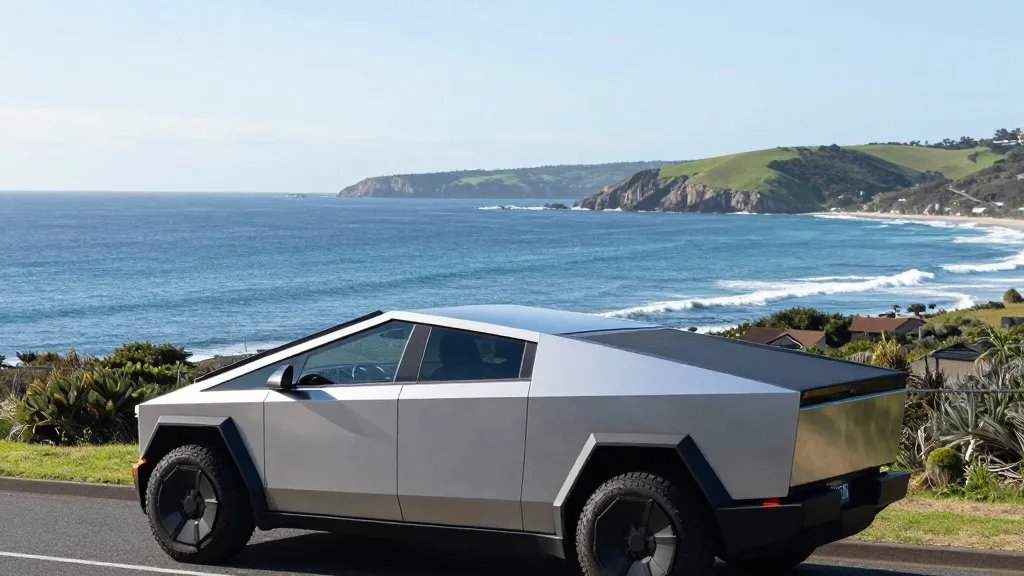
Tesla has officially withdrawn the Cybertruck from the Australian and New Zealand markets, notifying reservation holders this week that their orders have been voided. The electric automaker confirmed in emails sent to customers that plans to produce the vehicle for these regions have been discontinued, resulting in the cancellation of all pending reservations. This decision concludes a seven-year cycle of waiting for buyers in the region, who had been holding deposits for a vehicle that Tesla now states it will not manufacture for them.
The timeline of the delay stretches back to November 2019, when Australian consumers began paying A$150 to secure a spot in line for the electric pickup. For nearly seven years, potential owners maintained their reservations based on the promise of a future delivery. In 2022, Tesla quietly removed the Australian reservation page from its website, replacing the order button with an option to receive updates, but did not initiate refunds at that time. Customers were left in a state of limbo until the formal cancellation notice arrived this month, just one day after Tesla reported its third-quarter earnings for 2026.
The core technical obstacle was the vehicle's design. The Cybertruck is engineered exclusively for left-hand-drive markets. Australia, New Zealand, Japan, and the United Kingdom require right-hand-drive vehicles, a modification that demands significant engineering investment and specific regulatory certification. While Tesla has successfully launched the truck in several left-hand-drive markets, including South Korea, the UAE, Saudi Arabia, Qatar, Jordan, and Israel, the vehicle has remained blocked from the European Union largely due to pedestrian safety standards. The cost of re-engineering the platform for the roughly 33 million people in the combined Australian and New Zealand populations was deemed unjustifiable by the company's financial leadership.
Market data supports the decision to pivot. A crowdsourced survey from 2020 indicated that Australia held approximately 3% of all global Cybertruck reservations, placing it third behind the United States and Canada. By 2023, total global reservations were estimated at around 2 million. However, recent sales figures suggest a cooling demand for the model. In the third quarter of 2026, Tesla delivered only 8,295 units in the "Other Models" category, which now primarily consists of Cybertruck vehicles following the end of Model S and Model X production. Analysts estimate Cybertruck sales at between 7,000 and 8,000 units last quarter, a pace of roughly 30,000 annually, far below the 250,000-unit annual capacity of the production line.
Tesla is now attempting to convert the cancelled reservations into sales of models that are already produced in right-hand-drive configurations. As a goodwill gesture, the company is offering a free one-year subscription to Full Self-Driving (Supervised) to reservation holders who place an order for a new Model 3 or Model Y. Full refunds for all payments made toward the Cybertruck will be processed within 30 days of the notification. This strategic shift confirms that the Cybertruck is increasingly becoming a niche product focused on North America and other left-hand-drive markets, rather than a global flagship. The company's CEO had previously told shareholders in 2024 that certification for other markets might occur the following year, but the right-hand-drive version never materialized, leading to today's final decision.
The move also reflects broader changes in the vehicle's positioning since its initial reveal. The truck that eventually entered production differs from the early promises made in 2019, with a higher starting price and reduced range. With U.S. sales having declined significantly from their 2024 peaks, Tesla appears to be consolidating its international expansion efforts around existing inventory and left-hand-drive configurations, leaving the right-hand-drive markets to its sedans and crossovers.
Source: Electrek